Here is a link to an article and the 9marks site that examines the Nooma series. It is worth a look since Nooma is now very popular among youth. There is a problem with them though. They lack the message of Christ. You can't learn about his work or redemption from these videos. Check out the site for details.
Written by Sam Gantt
Thursday, February 14, 2008


Alcohol and Ethics: what both sides need to know
There has been a debate among some evangelicals, particularly Baptist, as to whether Christians are morally obligated not to drink alcohol or if drinking alcohol is morally permissible. In this post I plan not to argue for a particular position on this issue, but rather hope to be neutral. This is not because I do not have a position that I hold. I in fact do. I hope to present some points that will further the discussion. This will by no means be exhaustive.
First, I want to consider a point made by the pro-choice position (for lack of better word). This position usually argues that the scripture never speaks against the use of alcohol . Thus they argue that we cannot bind believers to an unbiblical position of complete abstinence. I think there is truth in this position. We cannot bind believers to an ethical position that the scripture does not support. This is one of the problems that the pharisees had. Moreover this is a problem that can be manifested without reference to alcohol. For instance, a while back many Christians thought that it was wrong to play with cards. Legalism is a deceptive virus that hides under the guise of holiness.
However, I want to point out to my brothers in Christ who support the pro-choice position that Christian ethics are not just determined by what the bible explicitly says, but also by scriptural principals that are applied differently in certain contexts. For instance, the bible says "honor your father and mother." But this scriptural principal is applied in America differently from the way it will be applied in Korea. In Korea the cultural relationships of older people, especially with parents, is very different that the cultural relationships here in America. Therefore, those who are with the pro-choice position need to realize that ethics is much more complex than just simply pointing out that the scripture never says, "though shalt never drink."
Second, we shall consider the not -even -a -sip-position. Now some within this position need to realize that scripture never explicitly says "Do not drink alcohol." This will be hard for some to take, but for the sake of not looking biblically illiterate, morally arbitrary and for further discussion to reach agreement this needs to be readily admitted. Another problem for some people that hold this position is they tend not to show that they have thought through this position with much clarity or with much critical thinking. I had a professor in my philosophy department point out one time that a good philosopher will not only know why he disagrees with a position, but also will know the criticisms for his own position. Many who engage in the alcohol discussion do not sufficiently understand the other sides position and I think that this is more so with the not even a sip position. Another problem generated by those that hold this position is that they tend to make generalizations based on their own past experience. This causes a lot of problems for the person to think critically through a debated subject. It can help blind a person from a true belief. It does not follow that because I had experience D with A that every body will have D with A when A does not entail D.
As I pointed out in a previous paragraph; that explicit statements in scripture do not mean that scripture does not forbid a particular thing. It also must be noted the those who argue that scripture teaches against something not explicitly stated, also have the burden of proof. While it is not impossible to prove from scripture that the non-explicit rule is true, it must be readily admitted that it is not as easy to find as those rules as those in scripture that are explicitly taught.
Therefore, both sides of the debate must remember that they are to be humble and not treat the other side as if it is simply obviously wrong!
Written by Stephen Stanford
First, I want to consider a point made by the pro-choice position (for lack of better word). This position usually argues that the scripture never speaks against the use of alcohol . Thus they argue that we cannot bind believers to an unbiblical position of complete abstinence. I think there is truth in this position. We cannot bind believers to an ethical position that the scripture does not support. This is one of the problems that the pharisees had. Moreover this is a problem that can be manifested without reference to alcohol. For instance, a while back many Christians thought that it was wrong to play with cards. Legalism is a deceptive virus that hides under the guise of holiness.
However, I want to point out to my brothers in Christ who support the pro-choice position that Christian ethics are not just determined by what the bible explicitly says, but also by scriptural principals that are applied differently in certain contexts. For instance, the bible says "honor your father and mother." But this scriptural principal is applied in America differently from the way it will be applied in Korea. In Korea the cultural relationships of older people, especially with parents, is very different that the cultural relationships here in America. Therefore, those who are with the pro-choice position need to realize that ethics is much more complex than just simply pointing out that the scripture never says, "though shalt never drink."
Second, we shall consider the not -even -a -sip-position. Now some within this position need to realize that scripture never explicitly says "Do not drink alcohol." This will be hard for some to take, but for the sake of not looking biblically illiterate, morally arbitrary and for further discussion to reach agreement this needs to be readily admitted. Another problem for some people that hold this position is they tend not to show that they have thought through this position with much clarity or with much critical thinking. I had a professor in my philosophy department point out one time that a good philosopher will not only know why he disagrees with a position, but also will know the criticisms for his own position. Many who engage in the alcohol discussion do not sufficiently understand the other sides position and I think that this is more so with the not even a sip position. Another problem generated by those that hold this position is that they tend to make generalizations based on their own past experience. This causes a lot of problems for the person to think critically through a debated subject. It can help blind a person from a true belief. It does not follow that because I had experience D with A that every body will have D with A when A does not entail D.
As I pointed out in a previous paragraph; that explicit statements in scripture do not mean that scripture does not forbid a particular thing. It also must be noted the those who argue that scripture teaches against something not explicitly stated, also have the burden of proof. While it is not impossible to prove from scripture that the non-explicit rule is true, it must be readily admitted that it is not as easy to find as those rules as those in scripture that are explicitly taught.
Therefore, both sides of the debate must remember that they are to be humble and not treat the other side as if it is simply obviously wrong!
Written by Stephen Stanford
Tuesday, February 12, 2008
Meditation on Evangelism in Acts 4
In the fourth chapter of Acts we see that the Jewish leaders had charged Peter and John not speak about our Lord (verse 18). However, Peter and John responded with such steadfastness, sturdiness and strength by setting the leaders straight that they in fact served the Lord. The question I want to pose is this: How can we who are believers in Christ have such boldness in our witness to unbelievers. This is a particularly important question for several reasons. First, the church has a mandate to spread the Gospel and second, secularism both in the modernistic and postmodern form has become so effective in distracting our culture away from the Lord of the universe, Jesus.
Now, there are alot of areas that I think Christians could improve on. I think that Christians need to take up the task of serving God with their minds by thinking theologically through many current intellectual issues and by thinking more clearly and systematically about the faith. However in this post I want to focus on prayer. I believe that if Christians spent more time in prayer then we would see a growth in the health of the church and we would see the church more victorious in her mission to convert those who rebel against our Lord.
Notice what Acts 4:29 says "And now, Lord, look upon their threats and grant to your servants to continue to speak your word with all boldness.
Now I want you to notice several things about this passage. First, notice that they had to pray for boldness. It did not come naturally. They prayed because they had threats with persecution against them. We who are a part of the body of Christ and live in America now do not have to undergo such persecution, yet many of us still do not willingly go out and share the gospel. We need boldness. Second, I want you to notice that it is the Lord who grants that we have boldness. Thus our boldness comes from the Lord. It is the Lord who deserves the glory in his saints passion to spread the gospel. Next, I want you to pay attention to the fact that they prayed for the boldness to continue to speak about the Gospel. They could have thought in their heads that they did a good job in the past and that that was enough. I have had experiences in the past where I will do a good deed and then I will think in my shallow heart that I do not need to spend my efforts doing it again. It is kinda like the kid who cleans his room and pats himself on the shoulder and thinks, "Well I cleaned my room two weeks ago I don't need to do that now." But this kinda thinking is wrong headed, moreover it serves as kind of an excuse from our duty. Peter and John knew that just because that had evangelized in the past did not excuse them from evangelizing in the future.Thus, they prayed for boldness to continue. Now you dear reader have an option. You can either delude yourself from thinking that you have an obligation to witness to the world (in that case read James 1:22) or you can pray for boldness to evangelize as Peter and John did. May God grant you the grace to be bold to spread the name and fame of our Lord.
Written by Stephen Stanford
Now, there are alot of areas that I think Christians could improve on. I think that Christians need to take up the task of serving God with their minds by thinking theologically through many current intellectual issues and by thinking more clearly and systematically about the faith. However in this post I want to focus on prayer. I believe that if Christians spent more time in prayer then we would see a growth in the health of the church and we would see the church more victorious in her mission to convert those who rebel against our Lord.
Notice what Acts 4:29 says "And now, Lord, look upon their threats and grant to your servants to continue to speak your word with all boldness.
Now I want you to notice several things about this passage. First, notice that they had to pray for boldness. It did not come naturally. They prayed because they had threats with persecution against them. We who are a part of the body of Christ and live in America now do not have to undergo such persecution, yet many of us still do not willingly go out and share the gospel. We need boldness. Second, I want you to notice that it is the Lord who grants that we have boldness. Thus our boldness comes from the Lord. It is the Lord who deserves the glory in his saints passion to spread the gospel. Next, I want you to pay attention to the fact that they prayed for the boldness to continue to speak about the Gospel. They could have thought in their heads that they did a good job in the past and that that was enough. I have had experiences in the past where I will do a good deed and then I will think in my shallow heart that I do not need to spend my efforts doing it again. It is kinda like the kid who cleans his room and pats himself on the shoulder and thinks, "Well I cleaned my room two weeks ago I don't need to do that now." But this kinda thinking is wrong headed, moreover it serves as kind of an excuse from our duty. Peter and John knew that just because that had evangelized in the past did not excuse them from evangelizing in the future.Thus, they prayed for boldness to continue. Now you dear reader have an option. You can either delude yourself from thinking that you have an obligation to witness to the world (in that case read James 1:22) or you can pray for boldness to evangelize as Peter and John did. May God grant you the grace to be bold to spread the name and fame of our Lord.
Written by Stephen Stanford
Monday, February 4, 2008
Philosophy of the Mind and Problems for Mind Body Materialist
Q: What is the Philosophy of the Mind?
A: Philosophy of the Mind is a discipline within Philosophy that seeks to understand what exactly the mind is. Philosophy of the Mind seeks to deal with problems that are associated with the fact (or some would say the appearance) that we have a mind.
There are basically two different views on what the mind is. These basic views are called 1.) mind-body-dualism and 2.) mind-body-materialism. When I say that these are the two basic views, I mean that they are fundamentally two basic views. Within view 1.) and 2.) there are differing views on how everything works out, but basically all of the views fall within category 1.) and 2.) There have been some monistic (views that state mind and body are neither material nor non-materical) views. But these views either reduce to 1.) or 2.), or they just dont make sense (at least as far as I can tell).
Anyhow the big question is this: Can our mind and those things that are thought to go along with it (thought, subjective-perception, qualitative feelings) be explained holistically in physical or materialistic categories. Now Christians will typically say no and that we have a soul. The materialist will say that all of our mental activity can be explained in physical or materialistic ways.
Below I have provided an arguement against mind body materialism. There are certainly other arguments, but I just read this particular argument and I find it pretty forceful. I have written a kind of rough sketch of the argument. The argument is taken from a paper written by philosopher Joseph Levine called "Materialism and Qualia: The Explanatory Gap." Joseph if you read this and I did not do a good job of representing your argument then I (Stephen) take responsibility.
A: Philosophy of the Mind is a discipline within Philosophy that seeks to understand what exactly the mind is. Philosophy of the Mind seeks to deal with problems that are associated with the fact (or some would say the appearance) that we have a mind.
There are basically two different views on what the mind is. These basic views are called 1.) mind-body-dualism and 2.) mind-body-materialism. When I say that these are the two basic views, I mean that they are fundamentally two basic views. Within view 1.) and 2.) there are differing views on how everything works out, but basically all of the views fall within category 1.) and 2.) There have been some monistic (views that state mind and body are neither material nor non-materical) views. But these views either reduce to 1.) or 2.), or they just dont make sense (at least as far as I can tell).
Anyhow the big question is this: Can our mind and those things that are thought to go along with it (thought, subjective-perception, qualitative feelings) be explained holistically in physical or materialistic categories. Now Christians will typically say no and that we have a soul. The materialist will say that all of our mental activity can be explained in physical or materialistic ways.
Below I have provided an arguement against mind body materialism. There are certainly other arguments, but I just read this particular argument and I find it pretty forceful. I have written a kind of rough sketch of the argument. The argument is taken from a paper written by philosopher Joseph Levine called "Materialism and Qualia: The Explanatory Gap." Joseph if you read this and I did not do a good job of representing your argument then I (Stephen) take responsibility.
Problems for The Mind Body Materialist
Consider 3 statements
1.) Pain is the firing of C-fibers
2.) Heat is the motion of molecules
3.) To be in pain is to be in state F
A.) The Mind Body Materialist (MBM) must argue that 1.) & 3.) are intelligible.
B.) If MBM is true then 1.), 2.) & 3.) will be true necessarily and cannot possibly be false.
C.)Is it easily granted that 2.) is true and understandable given
2` The phenomenon we experience through the sensations of warmth, heat & cold are the motion of molecules.
D.)It is epistemologically possible that someone be the state F or C-fibers firing and not be in the state of pain.
E.) It is at least epistemologically possible because we do not have the explanatory gap in 1.) & 3.) like we do with 2.) given the fact of 2`.
Thus we have a mind body problem for materialist. How is it that we have a subjective qualitative feel (or at least to some the appearance)? We don’t have an explanatory fill in (like 2`).
While this does not prove MBM false metaphysically, it does still provide us with a sufficient reason to doubt MBM to be true.
Sunday, February 3, 2008
Book Review: Basics for Believers
Title: Basics for Believers: An Exposition of Philippians
Author: D. A. Carson
Pages:128
In this book there is found solid instruction for the believer. As the title indicates it is meant for new believers, but is refreshing for mature ones as well. Using Philippians and Paul’s example
Dr. D. A. Carson is a research professor at Trinity Evangelical Divinity School.
Reviewed by Sam Gantt
Saturday, February 2, 2008
Good News for Prospective Missionaries
The Southern Baptist Theological Seminary recently add two new options for students wanting to go into the mission field: the reverse 2+2 and 5/12 program. The goal is to get more missionaries in the field more quickly.
See the article here.
See the article here.
Friday, February 1, 2008
Book Review: A Dialogue on Personal Identity and Immortality
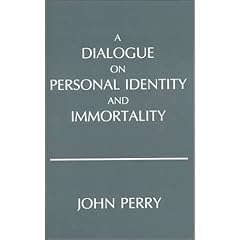

A Dialogue on Personal Identity and Immortality is written by John Perry. John Perry is the Henry Waldgrave Stuart Professor of Philosophy at Stanford University. He received a B.A. in philosophy from
A Dialogue on Personal Identity and Immortality (DPII hereafter) is deigned to provide readers an introduction to some of the main philosophical issues raised in the discussions regarding the belief in an afterlife and the constitution of personal identity. The book is separated into three parts. Each part is a separate night in the dialogue. There are three main characters: Gretchen Weirob, a philosopher at a local college; Sam Miller as chaplain and friend of Weirob; Dave Cohen a former student of Gretchen Weirob. The DPII is set in a hospital room. Weirob has been in a car accident and she is expected to die. Weirob asks Miller to try to persuade her that there is an afterlife. Miller takes up the challenge but fails to fully convince Weirob.
The book over all is very interesting. For those who have an interest in philosophy, but have a difficult time staying tuned in to the rigorous finely-tuned arguments that make up most of the analytic philosophical tradition, this might be a way of becoming familiar with some of the main concepts in the area of personal identity and immortality.
There are though, quite a few problems. First, Miller who represents the Christian minister is presented as someone who is not at all familiar with the philosophical issues related to the soul and the body. Perhaps this is true of many Christian ministers, but I think it would have been helpful to have Miller bring out some of the better philosophical arguments.
Weirob is cast as the ideal philosopher. She represents everything that modernist philosophers either want to be or pretend that they are. For instance, even though it would have been emotionally pleasing to have accepted a weak argument in the face of death, instead she is true to her philosopher self and she is able to analyze the arguments under such duress. The point of the book is to get at the philosophical arguments, but I think that there is something to be said about what she represents to modernist philosophers. Weirob wins all the arguments and is never persuaded to believe in an afterlife before she dies.
I know that I am biased, but I thought that some of the arguments were not all that good given by Weirob (Perry). For example, on the first night she makes a point to Miller about the existence of a soul. Her point is that we never see each others soul but we do see each others body. For instance, when I meet my friends on Monday, I do not see their soul I see their body. Since we only see each others bodies and no soul, how do we know that on Wednesday your friends soul is the same as the soul on Monday. Could not our souls be continually switched out and a new soul put in such that we never know our friends are the same people we spoke to at an earlier time?
Now I find this argument unconvincing and here is why: Is is all that different to presuppose that the soul is the same on Wednesday as it is on Monday than it is to presuppose that your friend has a subjective mental state on Monday and on Wednesday? Now let us pretend that there is no soul. Let us pretend for the sake of argument that personal identity consist in purely physicalistic categories. We still have the problem of experiencing one another's subjective mental states. We never actually experience the subjective mental state of another human being. We know for instance that we our own selves have subjective mental states because we experience our own feelings and perspective. But we never actually experience another person's feelings. How do we know that on Wednesday our friend has a subjective mental state? It is at least possible, there is nothing logically contradictory, about a body interacting within an environment without a subjective mental state. There is nothing contradictory about having no mental experience. How do we know on any day that our friends have subjective mental states? The answer is that we presuppose it because it is not something we can empirically verify. So I think the skeptical argument cuts both ways. If Weirob wants to say that we cannot have souls because it will force us into skepticism regarding our loved ones personal identities since there is a lack of empirical testability. So also we can not have physicalistic minds because it will force us into skepticism of other peoples subjective mental states, since other's subjective mental states cannot be empirically verified. Anyhow this is simply one of the problems I had with the arguments in this book.
Overall, it is very entertaining to read. It can be read in a sitting or two. It is only 49 pages. This book is good for Christians who want to better understand the metaphysical materialist worldview. It will help Christians understand how the materialist thinks about the constitution of personal identity and immortality. Materialism, as a philosophy, is now the dominant philosophy of academia and it could be argued the western world. Materialism is inherently atheistic. So for those Christians that want to learn how to handle the present and future intellectual challenges to our faith, it would be good to read this, but with critical thinking skills and with Christ as Lord of your heart and mind (see Colo. 2:6-8 and 1 Peter 3:15).
Written by Stephen Stanford
Subscribe to:
Posts (Atom)